There are journeys we undertake with a map in hand, charting every turn and destination. And then there are journeys of the soul, where the true landscapes unfold not on parchment, but within the chambers of the heart. For those embarking on their first Umrah, the pilgrimage to the Sacred House of Allah, the initial preparations often focus on the logistical – flights, accommodations, the proper attire for Ihram. We imagine a path paved solely with the familiar rituals, a sacred choreography performed with precision and devotion. Yet, Makkah and Madinah, these luminous cities, hold far more than the prescribed rites. They offer a transformative tapestry of human experience, spiritual lessons whispered by the wind, and insights that transcend the guidebook’s pages. As we prepare our hearts for this blessed expedition, it is wise to contemplate not just the ‘how,’ but the often-unspoken ‘what’ that truly awaits – the profound practical and spiritual realities that elevate a journey into a deeply personal odyssey of faith.
1. The Gift of Time: Rituals Conclude Swiftly, Reflection Lingers
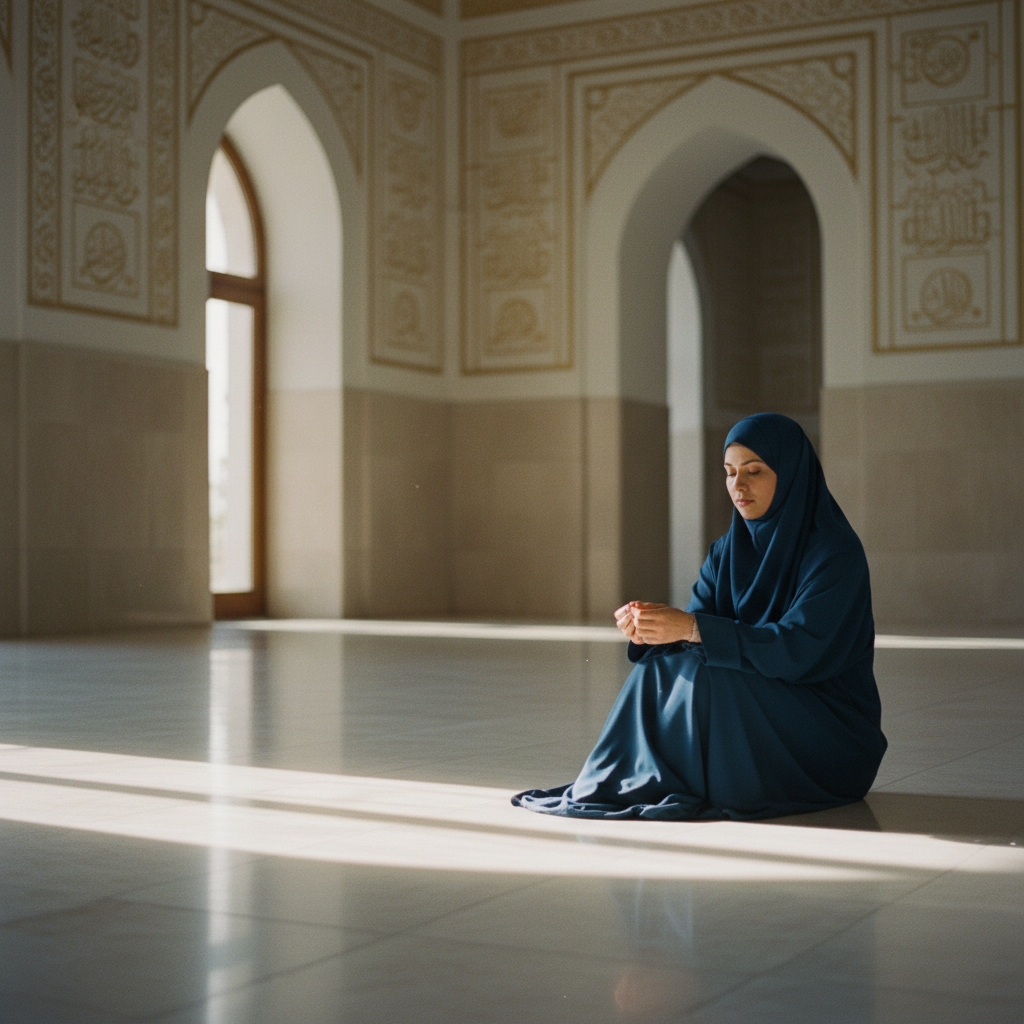
Many first-time pilgrims arrive with an earnest, perhaps even anxious, anticipation of the rituals. They envision days consumed by the sacred acts of Tawaf around the Kaaba, the fervent Sa’i between Safa and Marwah, and the subsequent Halq or Taqsir. There’s an assumption that these core elements will occupy the majority of their precious time in the Blessed Lands. The reality, however, often comes as a gentle revelation: the primary rituals of Umrah – from the moment of entering Ihram to the final clipping of hair – typically take a remarkably short duration, often completed within a focused two to four hours, depending on crowd density and personal pace.
This swift completion isn’t a diminution of the journey’s weight, but rather a profound gift. It liberates the pilgrim from the expectation of a perpetually packed schedule, unveiling a vast expanse of time for deeper contemplation, optional worship, and personal communion with the Divine. The blessing of Umrah isn’t merely in the rapid execution of rites, but in the sustained state of spirituality it ignites. The time freed allows for additional Tawaf, a spiritual exercise that draws one repeatedly to the heart of Islam; for prolonged periods of Du’a (supplication) at the multiqa (where duas are answered), for quiet recitation of the Quran, or simply for sitting in the profound presence of Masjid al-Haram, soaking in its unique tranquility and spiritual energy. This unexpected spaciousness invites a shift from a checklist mentality to one of sustained devotion, transforming the pilgrimage from a series of tasks into an enduring state of grace.
2. Unity in the Mataf: Embracing Humanity Around the Kaaba
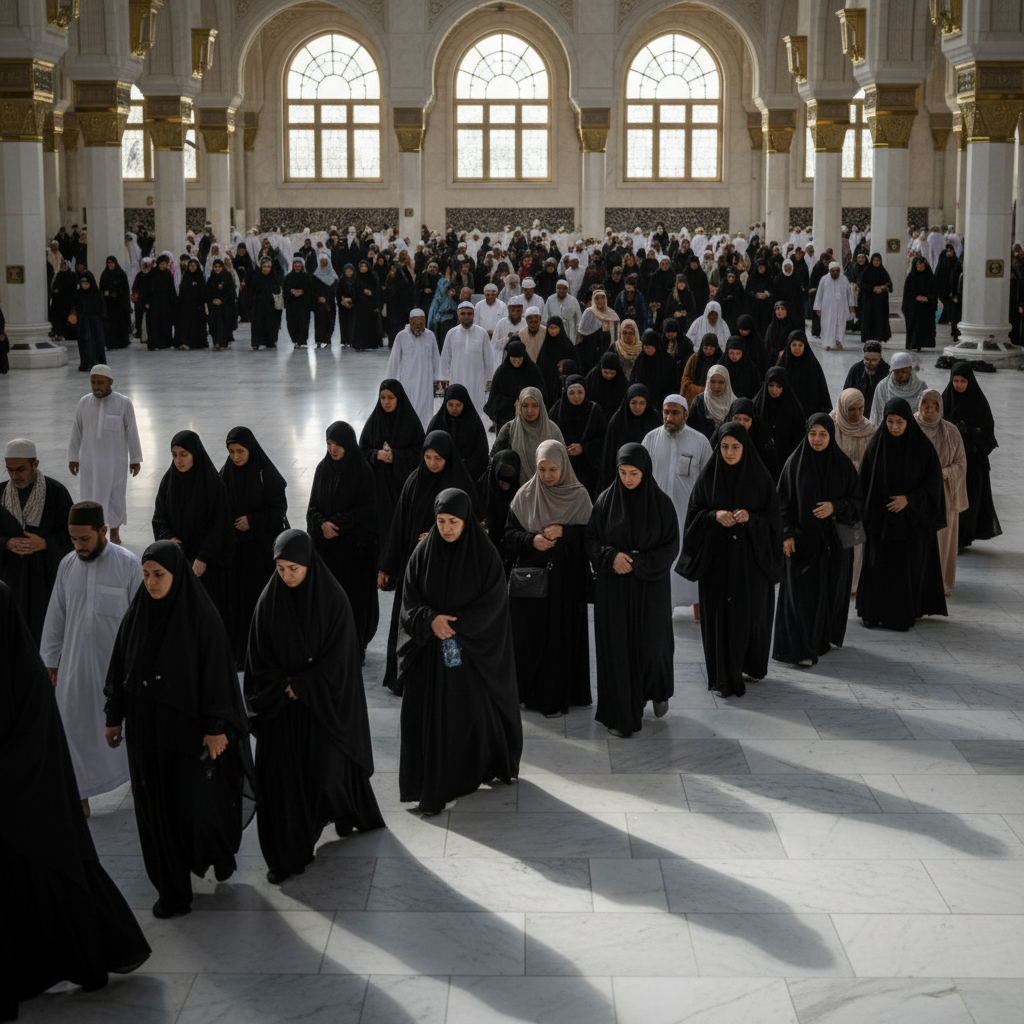
For many, particularly those from cultures where gender segregation is a norm in places of worship, the experience of performing Tawaf in the Mataf (the circumambulation area around the Kaaba) can be surprising. The sheer volume of humanity, flowing like a sacred river, often means that men and women perform this central ritual side-by-side, in incredibly close physical proximity. Pushing and jostling are not uncommon, especially during peak hours, and the concept of personal space takes on a new, collective dimension.
This aspect of Umrah, far from being a challenge to modesty, serves as a powerful testament to the Quranic emphasis on collective unity: “And proclaim to the people the Hajj; they will come to you on foot and on every lean camel…” (Al-Hajj 22:27). The Mataf becomes a physical manifestation of the global Ummah, where distinctions of race, nationality, wealth, and gender dissolve into a shared purpose. It is a profound lesson in humility, patience, and mutual respect. While maintaining one’s modesty remains paramount, this experience encourages pilgrims to adapt, to find comfort in the unity of purpose, and to extend grace amidst the crowd. Practical solutions, such as opting for Tawaf during early morning hours or late at night, or utilizing the less crowded upper floors of the Haram, can offer more personal space. Yet, embracing the proximity, understanding it as a unique expression of Islamic brotherhood and sisterhood, allows one to transcend superficial discomforts and truly absorb the powerful spiritual energy of collective devotion.
3. The Unseen Marathon: Vast Distances and the Test of Sabr
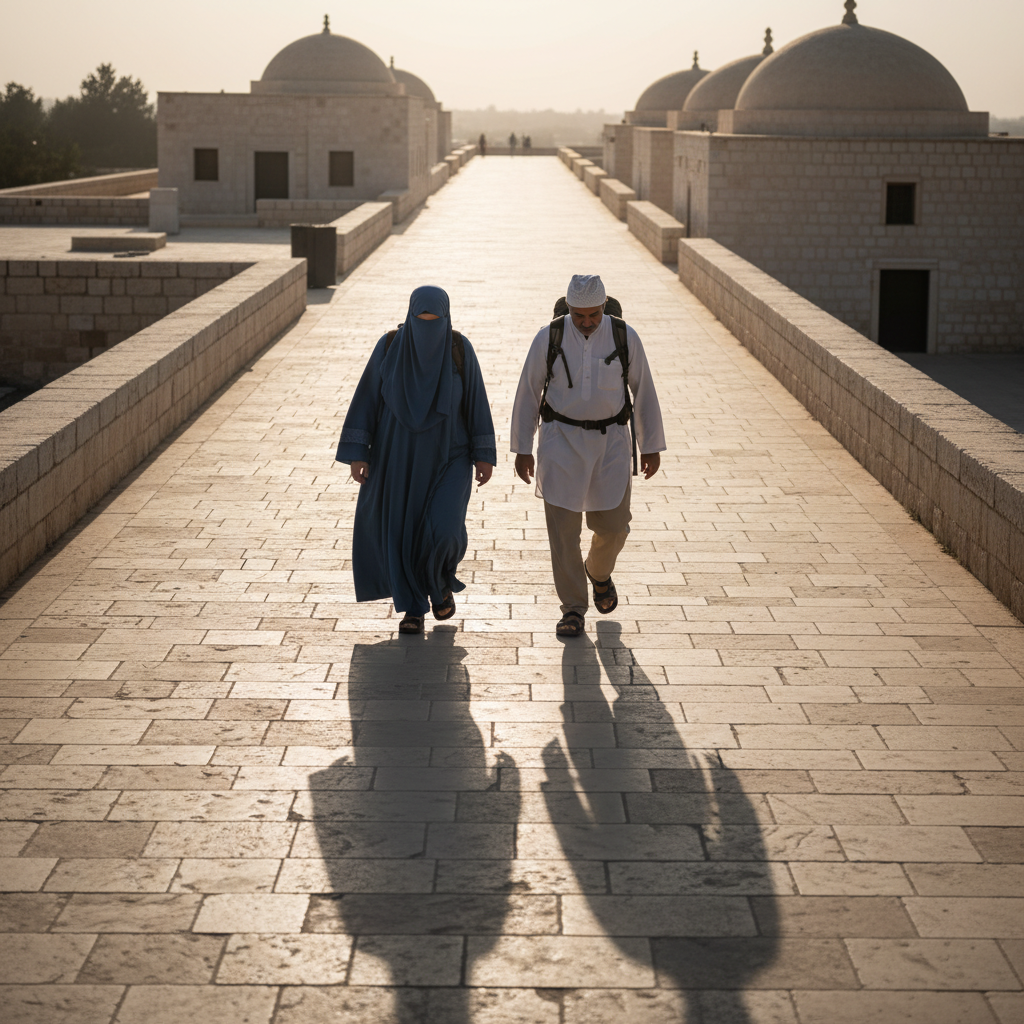
The cities of Makkah and Madinah, while spiritually magnetic, are also physically demanding. What appears as a simple walk on a map can quickly transform into an unexpected marathon, stretching one’s physical limits and testing one’s *sabr* (patience). Navigating from your hotel to the Haram, or between various points of interest, often involves significant distances, compounded by heavy human traffic, steep inclines, and the frequent, unpredictable closure of roads and pathways for security or crowd management. A 15-20 minute stroll can easily become an hour-long trek, accumulating upwards of 10,000 steps daily even without performing the rituals.
This physical exertion is not merely a logistical hurdle; it is a profound spiritual exercise. It echoes the trials of Hajar, whose desperate Sa’i between Safa and Marwah, as she sought water for her infant Isma’il, symbolizes ultimate reliance on Allah amidst struggle (Al-Baqarah 2:158). Her perseverance, rooted in faith, is a timeless lesson for every pilgrim. The vast distances and unpredictable routes become opportunities to cultivate patience, resilience, and a deeper understanding of Allah’s wisdom in every trial. Prioritize comfortable footwear, plan your routes flexibly, and above all, maintain constant hydration, especially in the warmth of the Holy Cities. Embrace these physical challenges not as inconveniences, but as integral components of your pilgrimage, designed to purify the soul and strengthen your connection to the divine narrative of sacrifice and trust.
4. Beyond the Checklist: The Primacy of Spiritual Preparation and Niyyah
In the rush of preparing for Umrah, it’s easy to get caught up in the logistical details: booking the right package, ensuring visa requirements are met, and packing appropriately. While these aspects are undeniably important, first-time pilgrims often discover that true reward and transformation stem not from meticulous planning of travel, but from the depth of spiritual preparation and the sincerity of *niyyah* (intention) with which each ritual is performed. The essence of Umrah lies far beyond merely checking off a list of prescribed actions.
To truly unlock the soul-cleansing essence of Umrah, one must delve into the history and meaning behind each rite. Understand that the Sa’i honors Hajar’s unwavering faith; that Tawaf is a symbolic circling of Allah’s oneness; that Ihram represents a state of pure devotion and equality before the Creator. This deeper knowledge prevents superficial performance and imbues each act with profound significance. The Prophet Muhammad (peace be upon him) emphasized, “Actions are judged by intentions, and every person will attain what they intended…” (Sahih al-Bukhari 1). Without a clear, heartfelt intention and a comprehensive understanding of the ‘why’ behind the ‘what,’ the spiritual benefits can remain elusive. Therefore, before embarking on the physical journey, dedicate ample time to studying the rituals, their historical context, the *Sunnah* (practice) of the Prophet, and the spiritual etiquette of the pilgrimage. This intellectual and spiritual groundwork is what transforms an outward journey into an inner unveiling.
5. The Labyrinth of Crowds: Mental Resilience Amidst the Chaos
The sheer scale of humanity converging in Makkah and Madinah is an awe-inspiring sight, yet it can also be profoundly overwhelming. For first-time pilgrims, the constant crush of crowds – amplified by heat, fatigue, and occasional disorientation – can present a significant test of mental and emotional resilience. What began as serene devotion can, at peak hours, feel like a relentless battle against external forces. The expectation of tranquil worship may clash with the reality of navigating a human labyrinth.
This dynamic, however, is not a flaw in the journey but an inherent part of its profound challenge and reward. It is a powerful exercise in *jihad al-nafs* (the struggle against the self), where one learns to maintain inner peace amidst external chaos. Strategies such as performing rituals during off-peak hours (deep in the night or early morning), utilizing mobile applications for group tracking and communication, and finding quiet corners for reflection can help manage the physical and mental strain. More importantly, embracing the crowds as a humbling experience, understanding that you are but one droplet in an ocean of believers, fosters a deep sense of collective purpose and submission. It transforms potential frustration into an opportunity for heightened patience, forgiveness, and an unwavering focus on the ultimate objective: connection with the Divine.
A Journey of Unveiling
The first Umrah is more than a pilgrimage; it is an unveiling – an unveiling of the self to its Creator, an unveiling of the human spirit’s capacity for endurance, and an unveiling of profound truths that lie beyond the immediate surface. While the sacred rituals form the heart of this journey, it is in these often-unspoken realities – the gift of time for reflection, the unifying embrace of diverse humanity, the test of physical and mental resilience, and the primacy of spiritual intention – that the true transformative power of Umrah resides. Each unexpected turn, each moment of challenge, becomes an opportunity for deeper understanding, greater patience, and a more profound connection to the divine narrative woven into the very fabric of these blessed lands. May your journey be one of profound unveiling, filling your heart with light and your soul with enduring peace.