In the vibrant tapestry of human experience, there exists a profound yearning for connection – a desire to belong, to share, to simply be with others. This longing is beautifully mirrored in our Islamic tradition, which exalts community, compassion, and the shared journey towards Allah. For centuries, the masjid, the house of Allah, has been the beating heart of Muslim communities worldwide, a sacred sanctuary for prayer, learning, and gathering. And it remains so, unequivocally.
Yet, the landscape of modern life, especially for Muslims navigating minority contexts in diverse societies, presents unique challenges and evolving needs. While the masjid holds an irreplaceable spiritual centrality, we must humbly ask: are our existing community spaces fully nurturing every facet of our spiritual, social, and intellectual lives? Are they reaching every soul, from the restless teenager to the curious convert, the dedicated sister to the elderly seeker? A growing body of insight suggests that to truly foster thriving communities, we need to embrace a broader vision – one that includes the concept of “Islamic third spaces,” particularly in the form of Muslim cafés and lounges.
What Exactly is a "Third Space"?
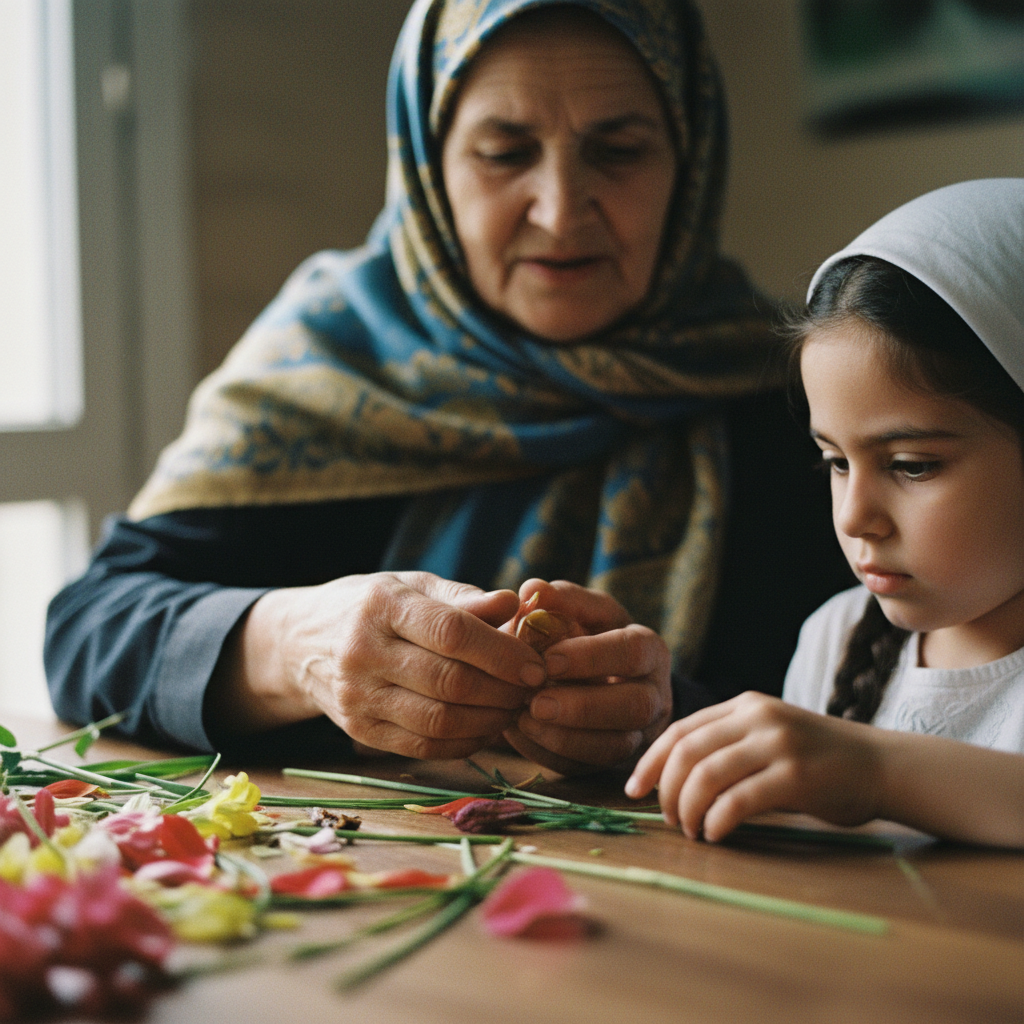
The concept of a “third place” was first articulated by sociologist Ray Oldenburg, who posited that alongside our first place (home) and second place (work or school), humans thrive with accessible, informal gathering spots where they can relax, socialize, and build community. These are spaces of casual encounter, spontaneous conversation, and genuine connection – a coffee shop, a barbershop, a community center.
In the Muslim context, an Islamic third space, as defined by the Institute for Social Policy and Understanding (ISPU), is an institution that “is not trying to replace the traditional mosque; rather it seeks to fill the gaps where the traditional mosque is unable to meet a community’s particular needs”. These are hubs designed to be safe, inclusive, and non-judgmental, welcoming people to “come as they are.” They prioritize social and spiritual support, offer relevant religious education, and provide platforms for civic engagement and identity formation, especially vital for Muslims in minority settings. Muslim cafés, lounges, and hybrid centers are tangible manifestations of these crucial third spaces.
Why Mosques Alone Aren’t Always Enough (in Practice, Not in Principle)
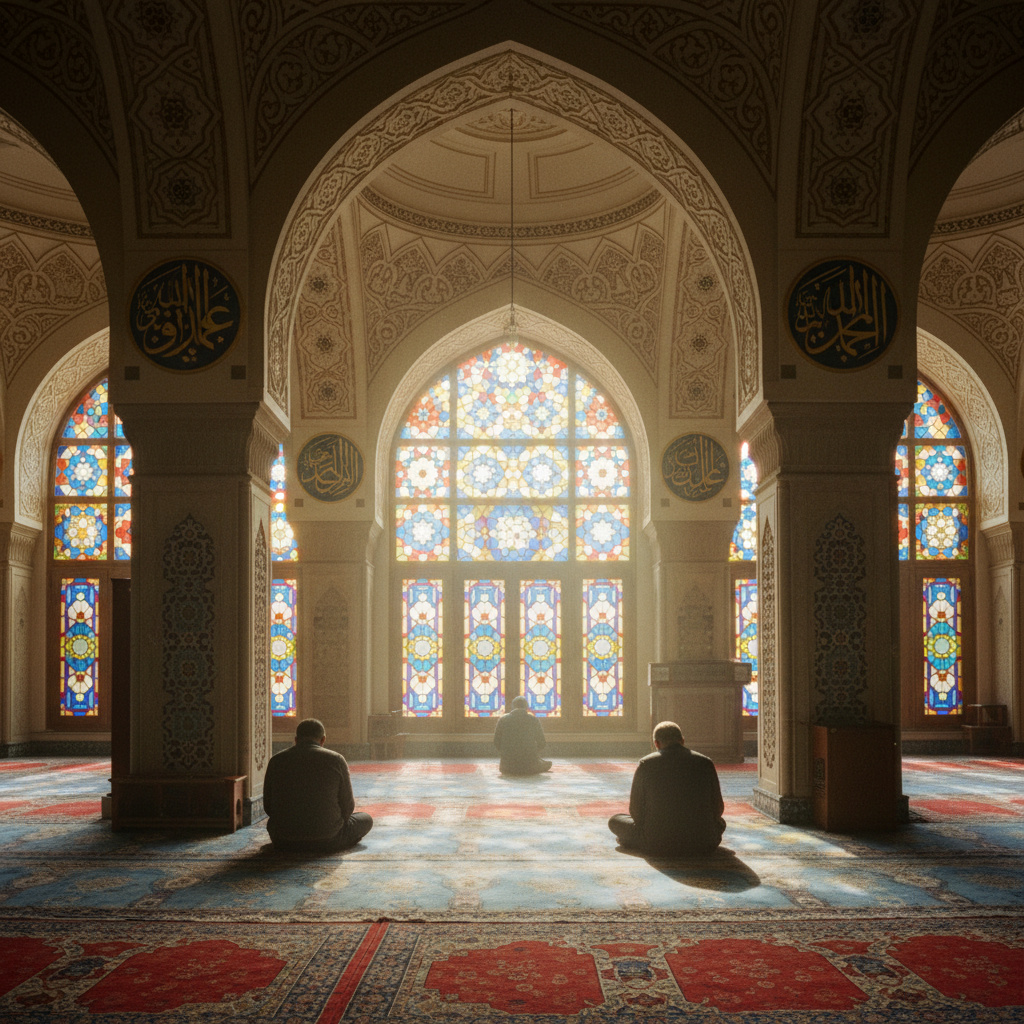
It is vital to reiterate that the masjid is the sacred cornerstone of our faith and community. Its spiritual role is unparalleled. However, research and community experiences reveal practical gaps that often arise due to the evolving needs of our Ummah and the architectural or operational realities of many mosques:
-
Accessibility and Belonging: Many young Muslims, in particular, express feeling “not religious enough” or “not accepted” in masjids. Demographic shifts can also lead to mosques feeling culturally “owned” by one group, inadvertently alienating others, as seen in the example of a Brooklyn mosque whose cultural norms shifted, impacting African-American members. Such experiences can create barriers to connection.
-
Underserving Women, Youth, and Converts: Studies show that Islamic third spaces like MakeSpace and CenterDC foster high “place attachment” among those who have often felt marginalized in traditional mosques, particularly women and youth. ISPU finds that third spaces intentionally prioritize these groups through inclusive design and programming. Converts, too, often seek less formal environments to learn and build relationships before fully immersing themselves in a mosque setting.
-
Functions Beyond Ritual Worship: Many mosques are, understandably, legally and architecturally optimized for prayer and formal classes. They are not always designed for the more informal, yet equally vital, functions of community building: spontaneous socializing, relaxed mentorship, creative work, quiet study, or casual mixed-age interaction. A powerful example is the ADAMS mosque in the US, which only fully became a youth “refuge” once it added the Qahwa Café & Youth Center – a built-in third space that catered to these broader needs.
In essence, while the masjid remains central and sacred, its current formats, through no fault of its own, often do not provide all the social, psychological, and identity functions that Muslims need to thrive in the complexities of modern urban life.
Islamic Textual and Historical Basis for Varied Community Spaces
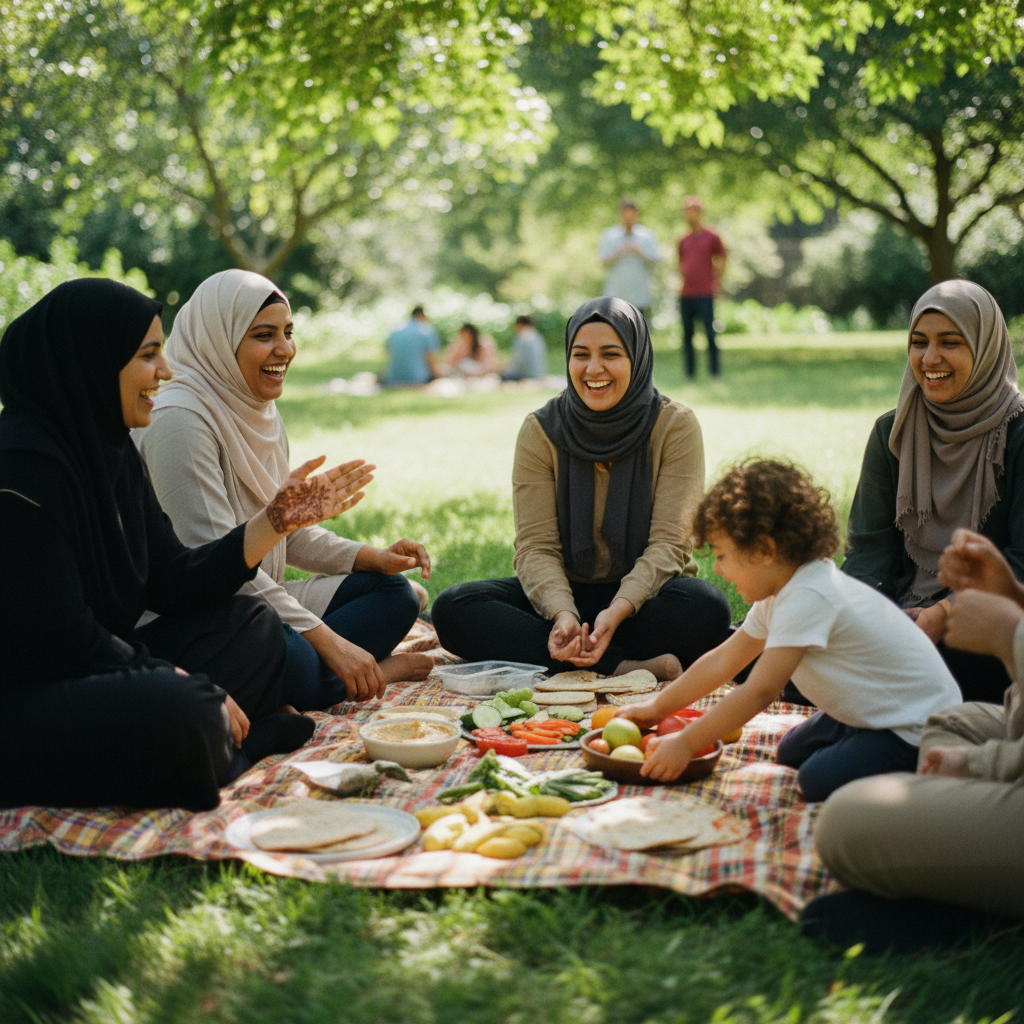
The concept of a “café” or “lounge” may be modern, but the *functions* these spaces serve are deeply rooted in the Quran, the Sunnah of our beloved Prophet Muhammad, peace and blessings be upon him, and the rich tapestry of early Muslim history. Our tradition has always embraced varied, accessible spaces for gathering, advice, leisure, and mercy beyond the formal prayer hall.
The Prophet’s Multifunctional Community Spaces
-
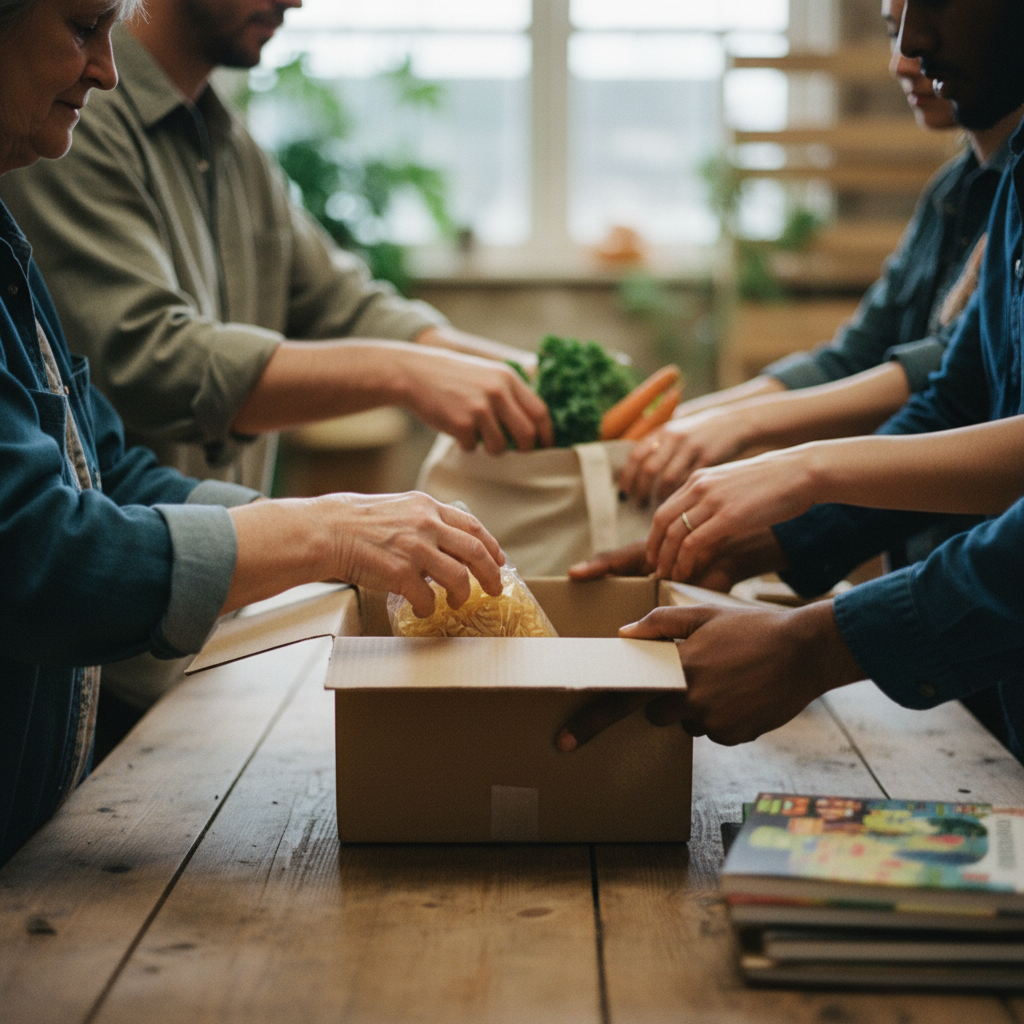
The Masjid as More Than a Prayer Hall: The Prophet’s Masjid in Madinah was a marvel of community design. Beyond Salah, it served as a dynamic hub for learning circles, diplomatic delegations, social welfare distribution, and even temporary shelter for the poor and knowledge-seekers (Ahl al-Suffah). This demonstrates Islam’s affirmation of spaces where people linger, converse, learn, and find rest in community, not solely for ritual worship.
-
The Suffah as an Early "Third Space": The shaded area known as the Suffah, attached to the Prophet’s Masjid, was home to poor companions and dedicated students of knowledge. Here, they received food, teaching, and companionship [Classical Sirah/Hadith]. Functionally, it was a social-support and learning zone – strikingly similar in *logic* to a modern youth center or a community lounge attached to a mosque.
-
The House of al-Arqam in Makkah: Before the public masjid in Madinah, the early Muslims in Makkah gathered in Dar al-Arqam. This private home served as a discrete, safe haven for teaching, spiritual nurturing (tarbiya), and quiet discussion away from the hostility of Quraish [Sirah texts]. It was, in essence, a proto-third space: neither public masjid nor mere residence, but a critical, semi-private hub for identity formation and community cohesion.
Quranic Values That Underpin Third Spaces
-
Creating Spacious, Welcoming Environments: Allah (SWT) says, "O you who believe, when you are told, ‘Make room in gatherings,’ then make room; Allah will make room for you." (Quran 58:11). Classical exegesis interprets this as a profound ethic of making space – both physically and socially – for others. Third spaces operationalize this ethic through intentional design, ensuring comfort and welcome for all.
-
Mercy, Ease, and Removing Hardship: The Quran repeatedly emphasizes ease and mercy. "Allah intends for you ease and does not intend for you hardship" (Quran 2:185), and "We have not sent you, [O Muhammad], except as a mercy to the worlds" (Quran 21:107). Creating low-barrier, non-intimidating venues like cafés and lounges, where Muslims and seekers can easily connect with Islam and each other, is a beautiful application of this divine rahman and tayseer (making things easy).
-
Enjoining Good in Varied Contexts: The command to invite to all that is good is not confined to the four walls of the masjid: "Let there arise from you a group inviting to all that is good, enjoining what is right and forbidding what is wrong…" (Quran 3:104). Any halal, dignified gathering place can serve as a platform for da’wah, learning, mutual support, and fostering virtue.
Prophetic Practice of Socializing and Hospitality
-
Gathering in Homes and Informal Settings: Numerous hadith depict the Prophet (PBUH) eating, engaging in appropriate humor, and conversing in the homes of his Companions, often late into the night for beneficial discussion. His saying, "The best of you are those who are best to their families…" (Tirmidhi), subtly highlights the religious value of intimacy, casual time, and kindness within private and semi-private spaces.
-
Permissible Leisure: The Prophet (PBUH) not only allowed but also participated in non-worship social activities. The famous incident of the Abyssinians playing with spears near his Masjid while people watched is recorded in Sahih al-Bukhari and Sahih Muslim. He also reportedly said, "Let the Jews know that in our religion there is room for leisure." This robustly supports the concept of halal recreation and performance within community spaces, including cafés and lounges with appropriate guidelines.
-
Honor and Sanctuary for the Socially Vulnerable: The Prophetic tarbiya (spiritual upbringing) was marked by profound gentleness. He consistently protected those who felt weak, ashamed, or spiritually struggling, treating them with mercy and guidance – consider the man who confessed a sin or the Bedouin who urinated in the Masjid. A non-judgmental, “come as you are” environment in a Muslim café or lounge, where boundaries of halal are maintained, beautifully echoes this Prophetic approach.
How Muslim Cafés and Lounges Concretely Serve the Ummah
These emerging spaces are not merely trendy hangouts; they are vital community assets:
Identity, Belonging, and Mental Health
For many, especially in the West, Islamic third spaces are crucial for fostering a robust Muslim identity. US studies show members of spaces like MakeSpace and CenterDC report strong “place attachment” and see these centers as critical for identity development and communal thriving. Muslim youth in Indonesia similarly describe “third places” aligned with Islamic values as key to stress reduction and building a sense of community. For minorities within minorities, such as Black Muslims, specific “Black Muslim third spaces” have emerged to address unique histories and needs often unaddressed in mainstream mosques. Muslim cafés and lounges can thus be intentional “belonging generators,” especially for those who feel on the margins.
Serving Groups Often Underserved by Mosques
These spaces are uniquely positioned to serve segments of our community who may find traditional mosque settings less accommodating:
-
Youth: Many young people feel they lack a voice or outlet in mosque governance. Youth-centered cafés and lounges, like the ADAMS Qahwa Café, explicitly address this, providing mentorship and safe socialization spaces designed by and for them.
-
Women: Islamic third spaces often prioritize equal visibility, leadership opportunities, and high-quality dedicated spaces for women, contrasting with the sometimes cramped or neglected women’s sections found in some mosques.
-
Converts and Seekers: Less formal venues make it easier for newcomers to ask “embarrassing” questions, explore their faith journey, and slowly build trust before engaging more fully with the established masjid community.
Bridging the Secular–Sacred Divide in Daily Life
A core aim of Islamic third spaces is to "recharge Islam and grow spiritually" in a way that seamlessly integrates civic engagement, professional life, social justice, and arts and culture. Muslim cafés and lounges can host a diverse array of activities:
-
Qur’an circles and halaqat (study groups)
-
Book clubs and film discussions with an Islamic lens
-
Career development workshops and entrepreneurship meet-ups
-
Mental health support groups and marriage workshops
This holistic approach supports the Qur’anic vision that all of life, when oriented with pure intention towards Allah, can be an act of ibada, not just formal rituals.
Design and Ethics of Muslim Cafés and Lounges
The success of these spaces hinges on thoughtful design and adherence to Islamic ethics. Key features include:
-
Halal Environment: Absolutely no alcohol; modest, wholesome entertainment; respect for privacy and appropriate gender guidelines, all within the beautiful framework of Islamic teachings.
-
Inclusivity Without Moral Relativism: The "come as you are" ethos does not imply "everything is allowed." Instead, it means embracing a merciful, gradual, and educational approach rooted firmly in the Qur’an and Sunnah, guiding with wisdom and compassion.
-
Comfort and Informality: Essential amenities like Wi-Fi, quality coffee and tea, comfortable seating, ample natural light, and long opening hours create a welcoming, productive, and relaxed atmosphere, often with workspace vibes.
-
Programmed and Unprogrammed Time: A healthy mix of structured events (workshops, talks, circles) and open-hangout hours allows for both intentional learning and organic friendship building.
-
Community Stewardship: Ensuring youth and women are genuinely included in governance and decision-making, coupled with transparency in finances and mission, builds trust and ensures the space truly reflects the community’s needs.
These design principles reflect timeless Qur’anic and Prophetic values such as shura (consultation), ihsan (excellence), rahman (mercy), and haya (modesty and dignity).
The Complementary Relationship: Mosques and Third Spaces
It is crucial to understand that Islamic third spaces are not competitors to mosques but rather complementary institutions, each fulfilling distinct yet equally vital functions. They are different expressions of our community’s heart. Some communities have chosen to create independent third spaces (e.g., MakeSpace, CenterDC), while others integrate them directly into existing mosques (e.g., ADAMS Qahwa Café & Youth Center).
An integrated model, where a sacred core for worship is surrounded by flexible zones for social, educational, and welfare activities, most closely mirrors the comprehensive vision of the Prophet’s Masjid in Madinah. It allows for both deep spiritual immersion and broad community engagement, covering the full spectrum of human needs.
A Holistic Vision for Our Ummah
As we reflect on the needs of our global Ummah in the 21st century, it becomes clear that a holistic approach to community building is not just beneficial, but essential. Our masjids remain the irreplaceable focal point for congregational prayer and the primary source of formal religious education. Yet, to truly embody the expansive mercy and wisdom of Islam, to nurture every soul, and to build resilient, thriving communities, we must also embrace the innovation and flexibility of Islamic third spaces.
Muslim cafés and lounges are not a deviation from our tradition, but rather a dynamic revival of its most expansive and inclusive spirit. They are places where faith intersects with daily life, where "come as you are" meets "grow as you can," and where the timeless values of Islam find new expression in welcoming, accessible environments. By investing in these spaces, we are not just building cafes; we are building bridges – bridges to belonging, bridges to knowledge, and ultimately, bridges back to the heart of our beautiful faith. May Allah guide us to strengthen all our institutions for His pleasure, and to foster communities that are beacons of light and mercy for all.