A Holistic Approach to Well-being: The Muslim Diet

Core Principles: A Balanced Path to Sustenance
As Editor-in-Chief for Nooropolis, our global hub for Islamic faith, values, spirit, and practice, I often reflect on the profound wisdom embedded within our traditions. Among these treasures is the guidance surrounding our diet – a system of eating that transcends mere sustenance, transforming into a pathway for holistic well-being. It’s a philosophy designed not just for physical health, but for mental clarity, emotional balance, and profound spiritual gratitude. Far from being a rigid set of rules, the Muslim diet, guided by the Quran and the Sunnah (traditions of Prophet Muhammad, peace be upon him), is a compassionate framework for a life lived in harmony with our Creator and ourselves.
In a world often overwhelmed by diet fads and conflicting health advice, the Islamic approach offers a timeless, serene, and intellectually robust alternative. It calls us to look beyond the plate, understanding that every morsel we consume is a blessing from Allah (SWT) and an opportunity to nurture the ‘amanah’ (trust) that is our body and soul.
Core Principles: A Balanced Path to Sustenance
Prohibited (Haram) Foods: Protecting Health and Purity
At the heart of the Muslim diet lie core principles that encourage balance, gratitude, and an avoidance of excess. These aren’t just dietary rules; they are life lessons intended to sustain our energy and well-being, allowing us to better fulfill our purpose as servants of Allah.
Moderation in Intake: The Golden Mean
Recommended Energizing Foods: Blessings from the Quran
Islamic teachings set the stage for a life of moderation. It’s a call to find the ‘golden mean,’ to enjoy the bounties Allah has provided without falling into the trap of overindulgence. Furthermore, Surah Ar-Rahman (55:7-9) reminds us, “He enforced the balance. That you exceed not the bounds; but observe the balance strictly.” This isn’t just about the quantity of food, but the balance of nutrients, the variety in our diet, and the rhythm of our eating. Excess, whether in food, drink, or any worldly pleasure, burdens the body, clutters the mind, and ultimately distracts the soul from its true purpose of worship and reflection.
The Prophetic Wisdom of Stomach Division

Health and Spiritual Benefits: A Path to Resilience
Prophet Muhammad (PBUH), our beloved guide, offered incredibly insightful practical advice centuries ago that resonates deeply with modern health principles. He taught, “No human being has ever filled a container worse than his own stomach. The son of Adam needs no more than a few morsels… a third for food, a third for drink, and a third for breathing” (Ibn Majah). Imagine the serenity that comes from leaving the table feeling light, energized, and ready for activity, rather than heavy and lethargic. This prophetic wisdom encourages us to eat just enough to sustain ourselves, allowing space for digestion, hydration, and proper breathing. It’s a powerful discipline that prevents overindulgence, aiding digestion, and sharpening our focus for prayer, study, and daily tasks.
Gratitude for Provisions: A Spiritual Feast
Beyond the physical act of eating, the Muslim diet emphasizes a profound state of gratitude. Allah (SWT) reminds us, “So eat of the lawful and good food which Allah has provided for you, and be grateful for the favour of Allah” (Surah An-Nahl 16:114). Every meal becomes an act of worship, an opportunity to acknowledge the boundless mercy and provision of our Creator. This conscious thankfulness transforms eating from a mundane necessity into a spiritual experience, filling our hearts with contentment and strengthening our connection to the Divine. It fosters a humble awareness that everything we have is a gift.
Mindful Eating: Savoring Every Blessing
In our fast-paced world, mindful eating is a revolutionary concept, yet it’s deeply rooted in Islamic tradition. It means focusing on our food, appreciating its taste, texture, and nourishment, without the distractions of television, phones, or incessant chatter. Eating slowly, chewing thoroughly, and being present during meals aids digestion, allows our body to signal fullness effectively, and enhances the sensory pleasure of eating. The Prophet (PBUH) encouraged us to vary our diet, incorporating fruits, vegetables, grains, and meats, not only to prevent fat gain but to ensure comprehensive nutrition – a complete and mindful approach to sustenance.
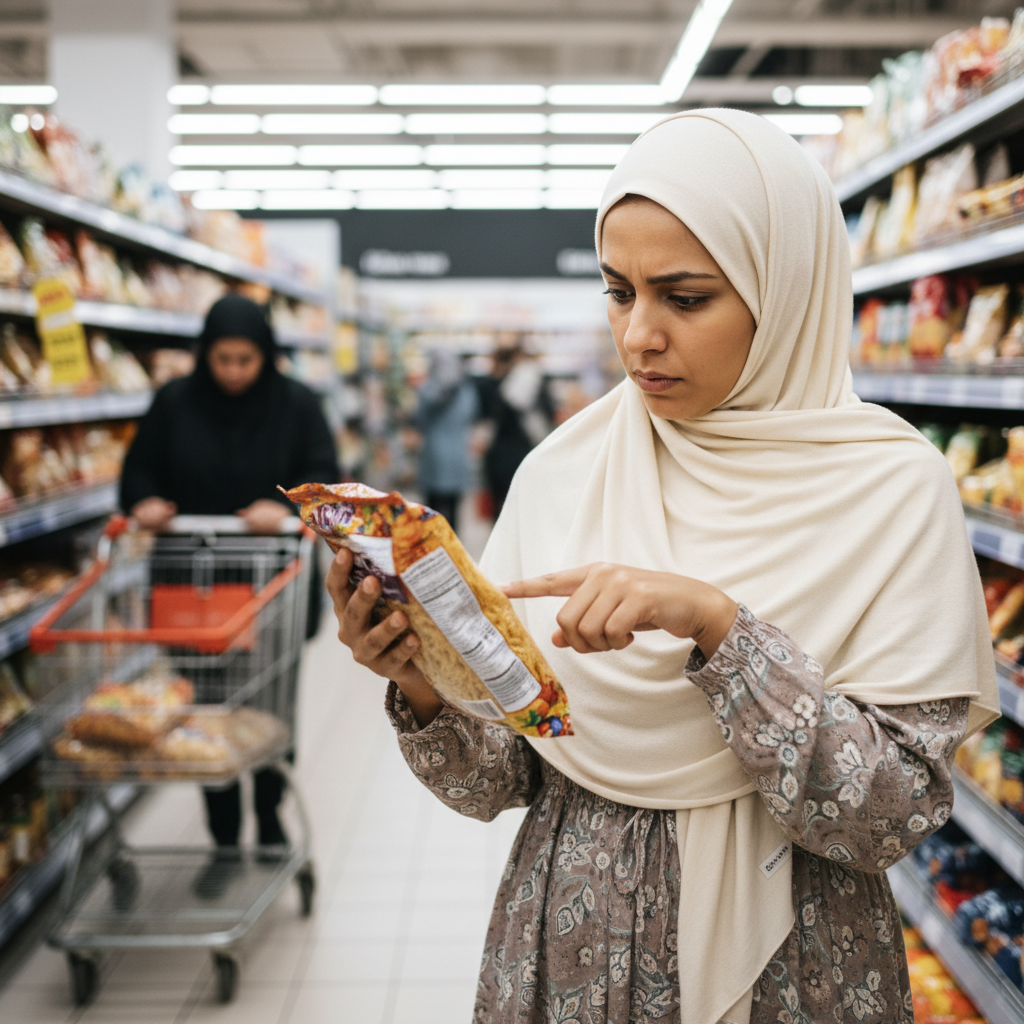
Prohibited (Haram) Foods: Protecting Health and Purity
Just as Islam provides clear guidelines for what is permissible, it also clearly defines what is prohibited (haram). These restrictions are not arbitrary; they are divinely ordained to protect our health, preserve our purity, and maintain our spiritual integrity. Understanding the ‘why’ behind these prohibitions helps us appreciate their wisdom.
- Dead animals, blood, pork (swine flesh), and food dedicated to other than Allah: The Quran explicitly states these prohibitions (Surah Al-Baqarah 2:173; Surah Al-An’am 6:145). The consumption of dead animals or blood is restricted for health and hygiene reasons, as these can carry diseases. Pork is prohibited due to various factors, including its perceived uncleanliness and potential health implications. Food dedicated to other than Allah infringes on the core tenet of Tawhid (Oneness of God) and directs worship away from Him.
- Additional prohibitions: Surah Al-Ma’idah 5:3 expands on this, forbidding animals killed by strangling, violent blow, fall, goring, or partly eaten by wild animals (unless properly slaughtered before death); and divining arrows. These prohibitions underscore the importance of humane slaughter (dhabihah) – ensuring the animal is alive and healthy before slaughter, minimizing suffering, and allowing for proper drainage of blood, which is itself prohibited.
It’s important to remember Allah’s boundless mercy: “But if one is forced by necessity, without willful disobedience, nor transgressing due limits, then there is no sin on him. For Allah is Oft-Forgiving, Most Merciful” (Surah Al-Baqarah 2:173). This compassionate exception highlights that the intent is never to cause undue hardship. For Muslims in non-Muslim lands, verifying halal sources, especially for meat, poultry, dairy, and cheese, becomes a crucial act of faith and due diligence.
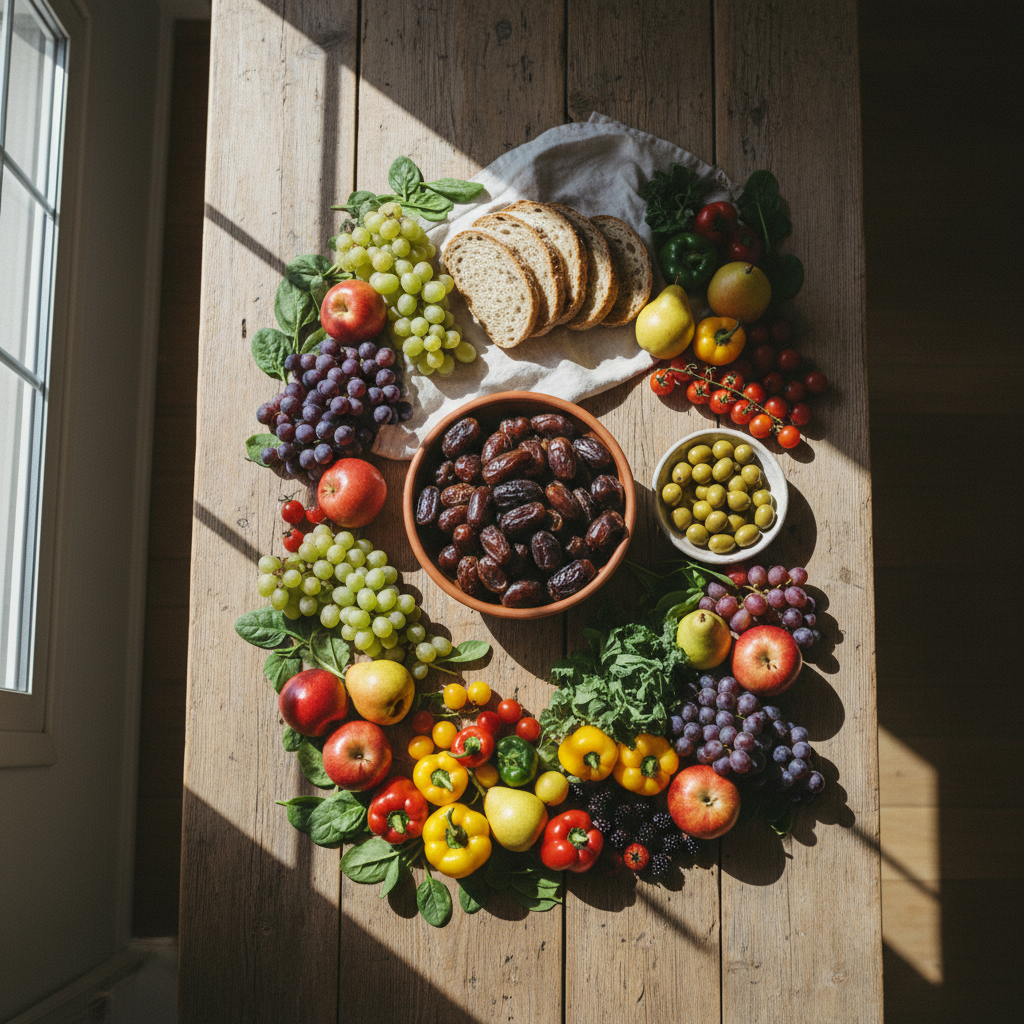
Recommended Energizing Foods: Blessings from the Quran
The Quran and Sunnah do more than just outline restrictions; they highlight a wealth of nutrient-rich foods that provide vitality and strength. These are often presented as signs of Allah’s sustenance and mercy, encouraging us to partake gratefully.
- Dates: The humble date is a blessed fruit, often consumed by Prophet Muhammad (PBUH) and recommended in the Sunnah, even as a source of breaking fast in Ramadan. Referenced in Surah Maryam and Al-Rahman, dates are rich in vitamins, minerals, and natural sugars, providing quick energy and acting as a natural multivitamin. Eating seven dates daily, as per Sunnah, is believed to offer significant health benefits.
- Olives: Mentioned in the Quran (e.g., Surah At-Tin), olives and olive oil are nutrient-dense, packed with healthy fats and antioxidants, renowned for their myriad health benefits for the heart and overall vitality.
- Corn and Grains: The Quran frequently references the growth of grains and sustenance from the earth (e.g., Surah Abasa 80:24-27, An-Naba 78:15). Grains like wheat, barley, and corn are high in fiber, B vitamins, iron, and zinc, providing sustained energy and essential nutrients.
- Vegetables and Fruits: The Quran speaks abundantly of the diverse fruits and vegetables that grow from the earth after rain, a clear sign of Allah’s mercy and provision (e.g., Surah Ash-Shura, Ar-Rahman). These are vital sources of vitamins, minerals, antioxidants, and fiber, essential for robust health.
- Quail Meat: Referenced in the Quran (Surah Al-Baqarah, Al-A’raf) as a provision for the Children of Israel, quail meat is a lean, protein-rich source, providing vitamins A, D, and K, important for vision, bone strength, and overall vitality.
- General Halal Options: A balanced Muslim diet includes a wide array of halal fruits, vegetables, eggs, properly slaughtered meat (beef, lamb, chicken, etc.), milk, and dairy products. These form the building blocks for physical energy, allowing us to engage fully in our daily responsibilities and acts of worship.
Incorporating these blessed foods into our daily lives supports not only our physical energy, providing sustained strength through balanced portions, but also our spiritual upliftment through the constant remembrance of Allah’s bounties and our thankfulness to Him.
Health and Spiritual Benefits: A Path to Resilience
The Muslim diet is far more than a set of dietary rules; it is a comprehensive system for building holistic resilience. This integrated approach ensures that our physical, mental, and spiritual selves are nurtured in tandem.
- Physical Resilience: The emphasis on a variety of fruits, vegetables, grains, and properly sourced meats prevents nutritional deficiencies. Moderation aids in optimal digestion, prevents weight-related illnesses, and ensures consistent energy levels throughout the day.
- Mental Clarity: A body that is not burdened by overeating or unhealthy foods is a mind that is clearer and more focused. This clarity is invaluable for concentration during prayer, for learning, and for productivity in our daily lives.
- Spiritual Alignment: By consuming halal and pure foods, we align our physical body with the purity of our faith. This conscious choice is an act of obedience, drawing us closer to Allah’s mercy and blessings. The act of gratitude before and after meals reinforces our connection to the Divine.
- Discipline and Self-Control: Adhering to the principles of the Muslim diet, especially during fasting months like Ramadan, cultivates immense discipline and self-control. These are virtues that extend beyond the plate, empowering us in all aspects of life.
Meal preparation guided by Quranic foods, such as ensuring a daily intake of dates, incorporating wholesome grains, and prioritizing fresh produce, actively enhances daily vigor. This mindful selection and consumption of food become a constant act of remembrance, drawing one closer to Allah’s mercy and provision. By consciously verifying halal practices for all our food sources, we ensure optimal results, not just for our physical health but for the purity of our hearts and souls.
Embracing the Nooropolis Way of Eating
At Nooropolis, we believe in living a life that reflects the beauty and wisdom of Islam in every sphere. The Muslim diet is a profound testament to this philosophy. It’s an invitation to cultivate a deeper relationship with our food, our bodies, and our Creator. It’s about eating with intention, with gratitude, and with an understanding that every choice we make has an impact on our physical, mental, and spiritual well-being.
Let us strive to embody these principles in our daily lives. Let us choose foods that energize us, not just momentarily, but consistently. Let us eat in moderation, leaving space for breath and reflection. Let us be ever grateful for the lawful and good provisions Allah has blessed us with. By doing so, we not only nourish our bodies but also elevate our souls, drawing closer to the Divine and living lives filled with health, vitality, and profound spiritual peace. May Allah (SWT) guide us to always eat of the good and pure and to be among the grateful.